Showing posts with label Teaching Training. Show all posts

Saturday, 24 August 2024

GLAM Wiki Training at Kondotty

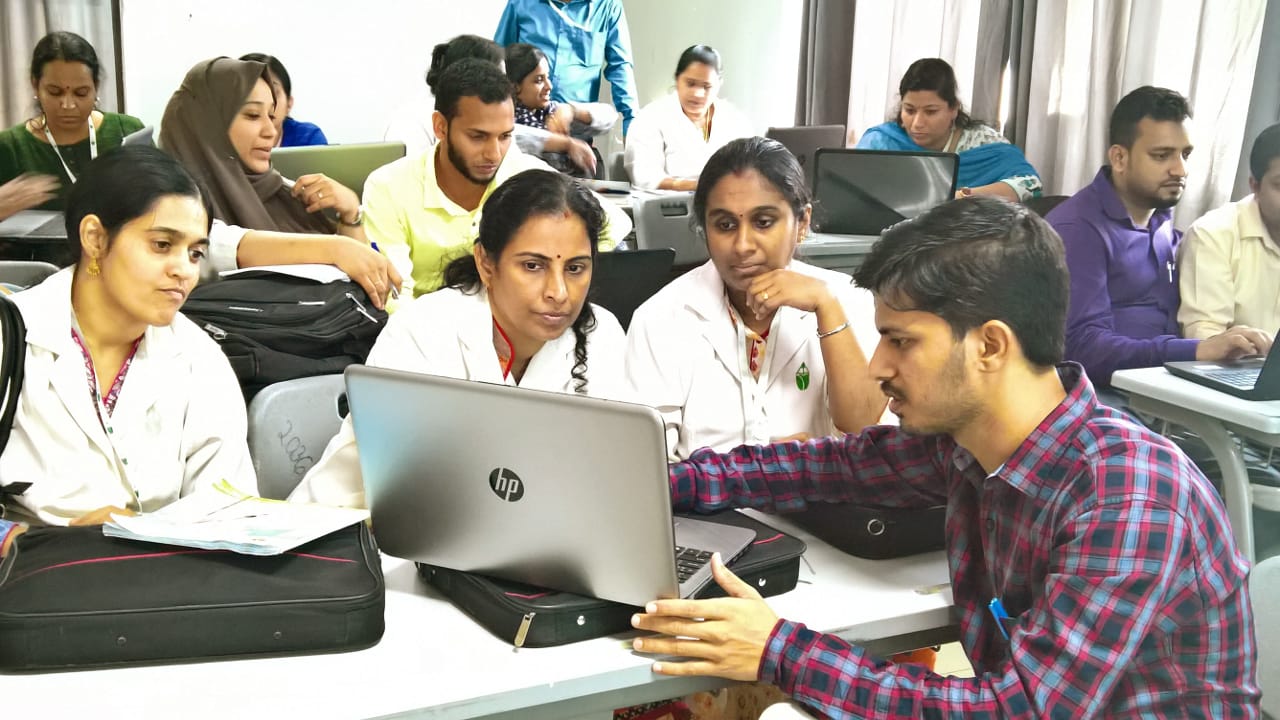
It was a pleasure to conduct a workshop on the GLAM and Eduwiki programs at Imam Bukhari Institute in Kondotty, India. The event was organized by the Students’ Association of Bukhari Da’wa College.


Kondotty has a rich history in Mappila art and literature. Notably, Mahakavi Moyinkutty Vaidyar, born in 1852, was a renowned poet and Ayurvedic practitioner from this region. He composed the romantic epic “Badarul Munir – Husnul Jamal” at just 17 years old.

During the workshop, 40 students participated, with some already contributing to Wikimedia Commons and Wikisource by uploading traditional Mappila songs and literary works. They are excited to continue contributing to Wikimedia with more cultural and literary content.

hashtag#GLAM hashtag#Eduwiki hashtag#Edu

Activate to view larger image,


Saturday, 2 September 2023

Making Thinking Visible

 I had the privilege of attending an insightful professional development program led by Ms Sangita Chima on the topic of "Making Thinking Visible in the Classroom" (MTV). This approach, developed by researchers at the Harvard Graduate School of Education, is all about bringing transparency to students' thought processes, enriching their learning experiences.


Our students enthusiastically embraced MTV activities, engaging in activities like See-Think-Wonder to spark their curiosity. This approach has not only boosted their classroom participation, but also fostered collaboration and led to the emergence of thought-provoking questions.


Here are some snapshots of our Amity School students actively involved in various tasks as part of their "Making Thinking Visible" project. A big shoutout to Ms. Sangitha for her outstanding leadership and dedication to enhancing our students' learning journey! 👏 #Education #MTV #CriticalThinking #professionaldevelopment #teaching

Saturday, 1 October 2022

Useful videos for teachers

These are some useful videos to get better understanding of the different elements of a good lesson.

Thanks to Athena Education

Measuring progress in lessons  

https://youtube.com/watch?v=WqqUDMwWeCk&feature=share 

Structure of a lesson 

https://youtube.com/watch?v=vQr4UXFcTp8&feature=share 

What every teacher should know about 3.1.1. of the Inspection Framework (Teachers subject knowledge and knowledge of how students learn) to 1.3 (Students Learning Skills)  

https://youtube.com/watch?v=HKJkgWS5JD0&feature=share 

What every teacher should know 3.1.2 (Planning of purposeful lessons and effective learning environment) 

https://youtube.com/watch?v=cHCTDQJ-H44&feature=share 

What every teacher should know 3.1.3 (teacher-student interaction, questioning & dialogue) 

https://youtube.com/watch?v=iIFvoso3Riw&feature=share 

What every teacher should know 3.1.4 (meeting the needs of different groups) 

https://youtube.com/watch?v=1mN7b2V0dVg&feature=share 

What every teacher should know 3.1.4 (teaching for critical thinking, problem-solving, innovation and independent skills) 

https://youtube.com/watch?v=TB8BX4Kxtpo&feature=share                                                                                                                                                             


How does teacher use of student assessment data change student outcomes


Saturday, 22 February 2020

Effective Question preparation- MCQ

1. Can we see the MCQ is defective ?


MCQ has 2 parts.
1 Stem ( question part)
2 Alternatives ( options)

Plausible distractors
Refer to the incorrect  / inferior alternatives
Identify commons errors of student thinking or application.

Principles of MCQ construction


Tuesday, 24 September 2019

Uses of assessment data to improve learning

always keep learning it keeps you young - Patty Berg


Saturday, 7 September 2019

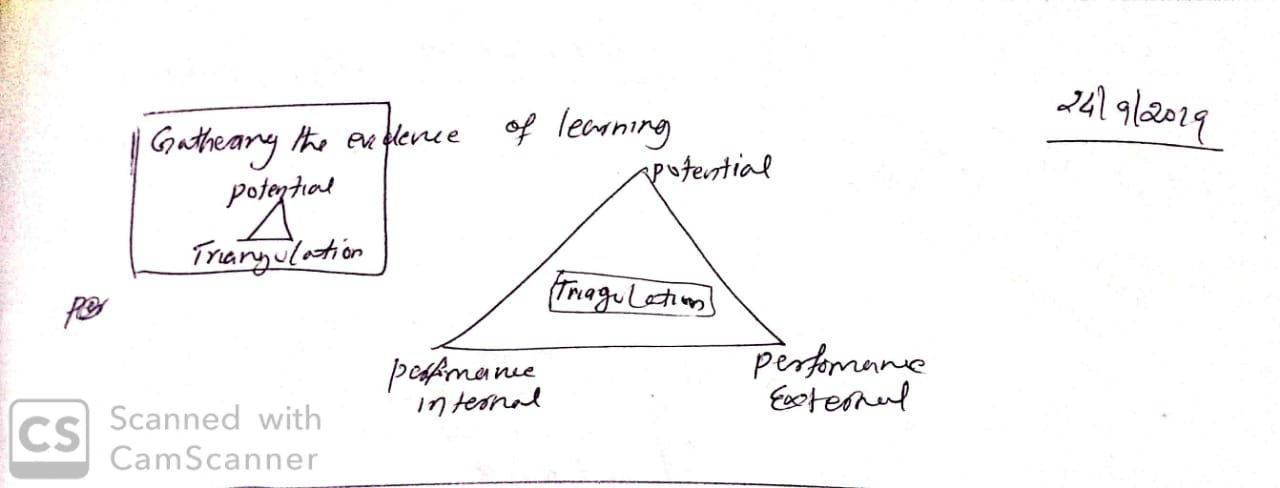
Assessment Strategies in Lessons

Assessment Strategies in Lessons 
PD Session - 7-9-19

__________________________________________________________________________

Teacher has to maintain three main files.
  • Logbooks
  • DLP File.
  • CPT File
__________________________________________________________________________

KWL Chart 

k
w
L
What is assessment?

How assessment is different from progression ?

I want to know what are the different strategies can be used for assessment?


When teachers asks the answers what teachers wrote in the “K” Column.
It should not be repeated by other groups.

Assessment
Provides an opportunities 

Different kinds of assessment

AFL- Assessment For Learning.( Formative Assessment) FA
AOL - Assessment of Learning
AAL - Assessment As Learning - Self Reflection
Students ask themselves about their learning.
__________________________________________________________________________
When to assess…

Sunday, 7 October 2018

PD Session - Effective Worksheet preparation


PD Session - Effective Worksheet preparation 

Date
Sunday 7th October 2018. 
Venue
Classroom - 9 P
Participants
Teachers from Grade 3 -12

Effective worksheet 
Introduction 
A worksheet, in the word's original meaning, is a sheet of paper on which one performs work. In education, a worksheet may have questions for students and places to record answers.
It can enrich their lessons.
SMART Boards, iPads, computers, chalkboards, and worksheets are all important tools of our trade. But remember: Tools can't enrich the learning process; only great teachers can.

Monday, 10 September 2018

Departmental Feedback session - Term 1


Sunday, 9 September 2018

DEMONSTRATION CLASS


Introduction
A demonstration class was conducted by the Social Science Teacher Shiju Rappai, on the Geography lesson “Types of Farming”. The session was scheduled for the duration of 30 minutes. All the teachers of Social Science department attended the session.
Session Objective: To analyse the lesson plan and execution and trigger a discussion on Activity based lesson.
Session Progression: The teacher used a visual and triggered a brainstorming on farming in India. Then, the class was divided into 3 groups and a Jigsaw was conducted based on the three types of farming. The lesson was concluded with a quiz which was an assessment activity. The teacher then summed up the content of the lesson

Saturday, 23 June 2018

CBSE Workshop

A training session was conducted by principal forum of CBSE in UAE at Habitat School


Almost all – 90%
most 75%- 90 %
Large majority – 61- 74 %
Minority – 50% t…


Attainment for good rating. ( Expectations )
The majority of students achieve above CBSE and International standard.
ASSET, IBT .. progress. - Majority. If it is more than 75% then it is outstanding.
We need to have 3 years of data of this.
Progress
It is important than attainment.
Entry Level test ( ELT / Baseline tests ) then Pts result – comparison.
40 minutes class – Beginning og the class what was students level,
after the class what is the level.
In a class room there will be minimum 4 groups.
Low achiever, middle achiever, high achiever and Special Education Needs (SEND).
These all groups should get progress after the class.

Saturday, 2 June 2018

Participation in Second Academic Retreat


Theme: To Remain Where We Are, We need to Run Fast. Are we doing that?
On the 2nd of June 2018, the Corporate Academic Division of my school organized a follow up session of the Academic Retreat that was earlier held on 2 May 2018. The venue was the school auditorium. The session started at 10 am and ended by 2: 15 pm.
The objective of the session was to refine academic processes, set quality milestones, review existing performance, knowing that self-assessment and setting milestones is the key to organizational success.
Method: Was Introspective, Interactive, Intensive supported by online live questionnaire and live analysis
Some of the sessions included were,
1. Review of School leadership vision
2. Review of challenges in front
3. Review Actions points of first academic retreat
4. Review of works assigned to the teacher and quality of teaching
5. Communication
6. MOE Inspection
7. Review of basic academic administration
8. Grade 10 Result Analysis

Sunday, 5 November 2017

Class Observation - General Feedback


Last one month, I have been observing different teachers class.
How do they teach?
What are the activities they are giving?
How is their class management ?

After going through few class observation , I just noted the following things.


I would like to extend to you the best regards and the best wishes and guidance.
One common thing is very clear that our teachers need to concentrate in activity oriented classes. Rest of the “positive and need works” feedback is given below.


POSITIVE POINTS :

Thursday, 7 September 2017

Teachers comments

Teachers comments are very important in teaching learning activities.

 Students consider it very serious . Instead of writing simple like good, outstanding, Very good or any emoticons we can write some meaningful comments in their note books as well as report cards..
Here we share some comments which we collected from here.
They are given below.

Wednesday, 6 September 2017

Questioning in Class Room - Why and How ?

Why do we ask questions in the class room ?

  • To test the previous knowledge of students
  • Enable them to the recall something
  • Enable them to think about something
  • Mentally alert
  • Stimulate curiosity
  • To link new knowledge with old.
  • To revise the lesson
  • To diagnose the weak points of students
  • To ensure participation

 Characteristics of questions

  • It Should be simple
  • Should not be ambiguous , lengthy and vague.
  • Should be relevant to the topic.
  • Echo questions should be avoided. ( Eg: Budha born in Lumbini. Where he was born ?
  • Adequate time should be allowed to answer.
  • Should be asked in a pleasing manner
  • Should not leave students in dark.
  • Should be suited to the ability of the children
  • Try to avoid asking more than one questions
  • Questions should be evenly distributed no child should be neglected
  • To create interest you can create “Rapid fire round”.


Teacher class observation


Photo Curtsey : www.listenandlearn.org

Class observations of teaching can be extremely effective in helping to enhance teaching performance. It offers the opportunity for faculty to improve and correct themselves.
The observation’s purpose will be to provide feedback on teaching practices and to suggest ways to improve those practices, if appropriate. Any information gathered through the classroom observation process is confidential and will not be used for any purpose other than enhancement of teaching: all information stays between the observer and the teacher being observed.
So we need to ask some questions ourselves.
They are following.

  • Why we are observing ?
  • Are you ready for observing ?
  • Why we need ?

Saturday, 13 May 2017

Teaching Websites

Wednesday, 19 April 2017

Leadership

Training help us to develop ourselves. Even if we know many things , the same things inform by someone to do influence us. So each training programme help us for career development.Effective teacher training helps prepare new teachers for these challenges. And it provides an Understanding of the Benchmarks for Achievement Today we had an excellent leaders training Programme at Habitat School Ajman. Mr. Adil, Mr. Wasim Yousuf , Mr. Aravind and Mr. Haris led different presentation.


Session – 1
Where were we ?

Points noted during various presentation

If you are a leader, the true measure of your success is not getting people to work. It's not getting people to work hard. It is getting people to work hard together. That takes commitment." John C. Maxwell

Session – 2
Best practices in writing business email


Session – 3

Leadership


Mr. Waseem read the story of Mullah Nasruddin.
(I wrote two lined and collected by searching it. It given below.)

The Way

One sunny spring afternoon Nasrudin was sitting peacefully by the imposing North gate of Samarkand watching the colourful string of caravans following each other and followed in turn by the curious glances of the populace.

Monday, 17 October 2016

TCI Workshop by Dr. Thomas Abraham


Trainer : Dr. Thomas Abraham

Class Audio is available here Part- I

Part -2

 Celebration of Diversity


TCI Workshop
Founder - Ruth Charlotte Cohn
Ruth Charlotte Cohn (born August 27, 1912 in Berline was a psychotherapist, educator, and poet. She is best known as the creator of a method for learning in groups called Theme Centered Interaction (TCI).

Structure and Method
1. Input
2. Reflective Silence
3. Journaling
4. Interaction


Introductory Remark
1. One Prayer
2. Five Wishes
3. Opportunities

Prayer

The song I came to sing!
- Rabindranath Tagore

The song that I came to sing remains unsung to this day.
I have spent my days in stringing and in unstringing my instrument.
The time has not come true, the words have not been rightly set;
only there is the agony of wishing in my heart.
The blossom has not opened; only the wind is sighing by.
I have not seen his face, nor have I listened to his voice;
only I have heard his gentle footsteps from the road before my house.
The livelong day has passed in spreading his seat on the floor;
but the lamp has not been lit and I cannot ask him into my house.
I live in the hope of meeting with him; but this meeting is not yet.

-Rabindranath Tagore in the Gitanjali

My 5 Wishes

  • Tp Workshop (Turning Point )
  • 2 / 3 Article
  • Share at home
  • I would like to come for next
  • Quotation


Teacher is a person is more important than Teacher as a Resource Person
Where am I ?
Where do I want to be ?
What are my first steps ?


We have three powers
  1. Qualification ( Professional Power)
  2. Positional Power
  3. Personal Power
  • It is very important
  • We remember the persons on the basis of this
  • Eg : APJ Kalam

WHERE IN LIVES MY PERSONAL POWER ?


THHE KEYWORD OF HABITAT ?
Future Shock is a book written by the futurist Alvin Toffler in 1970 

To retain in your position , you have to be constantly updating.


Learning Journaling

Record your Personal growth

Thoma's Book – Footprints of my personal growth.


The World that stays closest to my heart.

My Mother


How did I become who I am today ?

By Nature
By Nurture

Write a person who influenced you that person that I am

Father “

The Teacher Who influenced me most while in School

Hareesh

I have only Myself
I have only this life on earth


Monday, 10 October 2016

Kagan structures of Class - Activity Oriented


Traditional teaching engages some students but not all . Kagan is a revolutionary approach to teaching that actively engages every student.

let's look at the problems traditional teaching creates, students sit in rows,
the rule is,no talking the teacher presents new information or a new skill
to engage students the teacher asked the class a question .one student response at a time.

sounds familiar doesn't it so what's wrong with that.The first problem is we
set our students against each other.When the teacher calls on Peter to answer soo Lee lowers her hand and disappointment ah....but when Peter begins to falter.

He shoots your hand back up waves wildly pick me teacher ,a subset of
students compete for the opportunity to shine.A competitive class is not a brain
friendly learning environment .The next problem is students been very little
time actively engaged the teacher is doing most of the talking most of the time .

when we finally do engage students it's one at a time .It's like being in a long line waiting to be served a big percent of the class to somewhere between mildly interested and comatose.Many students don't want to turn they feel they can't or don't want to compete johnny is shy monica is lower achieving one is still learning English .

These students don't want to be singled out .Don't call on me they hide they opt out it's no wonder we have an achievement gap . Traditional teaching engages some of the class but many students can easily slip through the cracks cake and engages all students we turn things around.Literally instead of facing the back of a classmate's head returns to surround the face each other instead of calling on one student at a time we can call up all students using a keg and structure time to pair share the teacher asked a question in pairs partner a shares for shares for .Everyone has turn sharing with the partners safe.

There's no need to hide in just a little over a minute we engage every student in the same amount of time in the traditional class we engage one student what's better engage one student or engage every student .Absolutely right .Everyone learns more it's not just the amount of engagement that matters it also matters how we engage students with Kagan structures we engage students with interactive pair and team structures while students master academic curriculum they develop essential social skills ,they learn teamwork skills, they develop communication skills, they practice leadership skills these are the very college and career readiness skills are standards call for in teams students are no longer isolated or competing against each other.

They celebrate each other successes .
They are on the same side cooperation leads to kinder and more caring kids.
We create buddy's not bullies.
Kagan simple yet powerful structures transform education in number of heads together teammates put their heads together to review .Every one is more active and the content becomes more memorable in quiz quiz trade students repeatedly quiz classmates they have so much more fun being up and active than working alone.

In rally coach partner solve problems together instead of independent practice .Students have appeared to coach them and provide immediate feedback .While teach the traditional way when we have so many alternatives to engage every student

Kagan isn't something we think might work .Kagan is scientifically researched based

hundreds of studies on cooperative learning show tremendous academic and social gains over traditional with Kagan. Teachers are engaging their disengaged students struggling schools are making dramatic games entire districts are raising their test scores kagan works .Kagan works because Kagan creates full engagement for every student engaged students are bored or disruptive engaged students enjoy school more engaged students learn more Kagan it's all about engagement

Wednesday, 5 October 2016

The Future generation & Teachers

What will be the role of teachers in future ? Can we call them teachers ? Now most of the educators tell that we can call them "facilitator".
Currently there are a lots of changes in educational sector.

We can see it in different ways. Method of Teaching, Learning Activities, Evaluation etc. Again there are many changes is going to happen in the filed of education. One of them will be Google Class Room.

Today we had an opportunity to participate in a workshop which was conducted by brams along with Google on “Innovate Education with Google” at Duabi. The event highlighted on creating awareness on Google for Education among teachers. There were around 30 teachers from various educational institutes around UAE.
I think our next main changes in innovative education will be Google class room with Google Apps. Teachers / Institutions can't limit our students thoughts and knowledge.

According to Google, more than 50 million number of students and teachers who use Google Apps for Education around the globe. Bogdan Copil lead a good workshop. 


Google Apps is an online solution that bridges the divide between learning at home or at school. It offers the opportunity for collaboration to happen in real time, irrespective of physical or digital location.

During this days some of my colleagues asked me-
Then What will be the role of teachers in future ? Can we call them teachers ? As a result of a lots of changes in educational sector the teacher name has replaced to facilitator .


Equipping this generation of learners with modern tools makes sense. This is why many schools are adopting Google Apps for Education, an extraordinary platform for the 21st Century.